 New START, the treaty that limited US and Russian strategic nuclear arsenals, will expire on 5 February 2026. So, what will happen next? This post tries to outline some scenarios of how the United States and Russia could respond to the treaty expiration. None of these are truly optimistic, but some are less pessimistic than others.
To recap, the treaty was signed on 8 April 2010, entered into force on 5 February 2011, and then extended for a full five years in January 2021. The extension was done by an exchange of notes between the Ministry of Foreign Affairs and the US Embassy in Moscow on 26 January 2021. Russia ratified the extension by a Federal Law, which entered into force on 3 February 2021. In February 2023 Russia announced that it suspends the treaty. The United States protested, pointing out that the treaty does not have a suspension option, and later retaliated, suspending data exchanges and other activities.
In September 2025, the Kremlin announced that
Russia is prepared to continue observing the treaty's central quantitative restrictions for one year after February 5, 2026.
The United States has not responded to this offer one way or another. President Trump said at some point that it was a good idea, but in a January 2026 interview said that "If it expires, it expires. We'll do a better agreement."
The main reason the United States has not responded to the Russian offer is that the US expert and political community has essentially reached consensus on the need to expand the US strategic arsenal. The arguments are China's buildup, "the two-peer problem," Russia's record of non-compliance, and optimism about winning arms races. The strength of these arguments can be debated, but at this point the momentum to ditch New START limits is very much unstoppable.
Nevertheless, there are options. The most optimistic one is that the United States will accept Russia's offer and will commit to adhere to the New START limit for one year. It is, however, extremely unlikely that the United States will do so, unless, of course, this would be a decision coming directly from President Trump. Still unlikely, but not impossible.
One problem with accepting the Russian offer as it stands is the absence of verification. It's not that the United States is in the dark about the status of the Russian forces, at least to the extent that matters. But verification is an important symbolic element of a treaty that can signal how serious a state is about its obligations. Ideally, the United States would make a counteroffer and suggest that it would be willing to stay within the treaty limits if Russia agrees to resume some verification activities. Data exchange and notifications, for example. On-site inspections would be even better, but these require a formal treaty, mostly because of the immunity for inspectors and other issues like that. But data exchanges are doable without a treaty. My guess is that Russia would refuse to resume anything, but it is worth trying. It's a reasonable ask and the United States could point at it as a sign of good-faith effort.
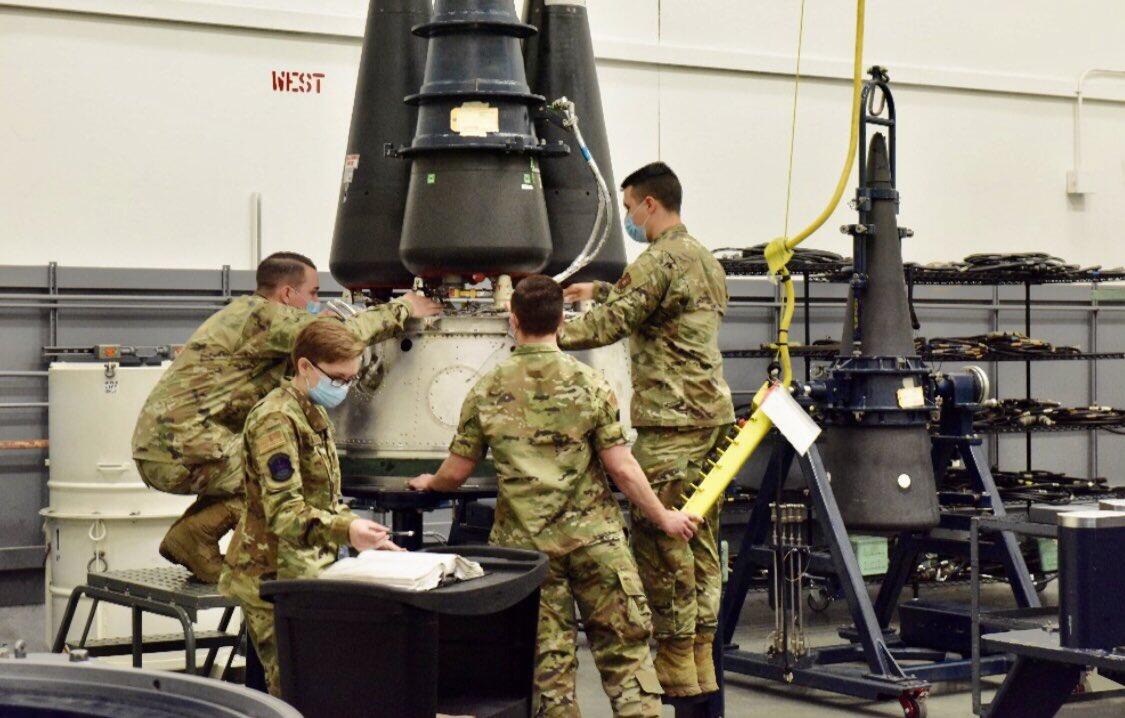
On the pessimistic side of the spectrum, the United States will declare that it is free from any constraints and proceed with what is known as "upload" - returning reserve warheads to its missiles. The US "upload potential" would allow it to increase the number of deployed warheads from the New START 1550 to about 3500 (here is a good post by the FAS team).
There are options within this pessimistic option too. For example, the United States can do the upload openly and report (with some accuracy) how many warheads have been returned. Or it can just keep everyone in the dark about its plans and specific upload steps. I hope that since the upload would be a largely symbolic step aimed at China, the plan will be made public, but it might not.
One interesting option, which is somewhere in between, is that the United States will note the end of the treaty, say that there are no obligations anymore, but then neither proceed with the upload nor say publicly that they will stay within the treaty limits. So, the Russian offer will be accepted but silently. This could create an interesting challenge for Russia, which would then have to decide how to react. I don't think this scenario is particularly likely, unless there is some kind of internal disagreement about what to do. But the United States can postpone any announcement until at least the NPT PrepCom session in May 2026.
As for Russia, I would expect that it will confirm its offer and pledge to adhere to the treaty limits for at least one year no matter what the United States does. There is really no downside for Russia in doing so. It would get to show itself "a responsible nuclear power," which could come in handy at the NPT PrepCom meeting and in other contexts. Then, in February 2027 Moscow would reluctantly say that it has no choice but to follow the United States. But it's not like Russia needs more warheads.
I don't think we can avoid the scenario in which the United States goes for upload. But as for the announcement of the decision, we will probably have to wait. One can announce the decision to go for an increase later, when the wave of anxiety about the end of a major arms control agreement has passed. On the other hand, the opponents of the limits extension rightly worry that if they let the 5 February 2026 moment pass, it will be more difficult to justify the buildup later on. This is probably the main reason the opposition to the Russian offer is so strong - the opponents don't want to let people get used to the idea that one may not need a treaty to keep the number of nuclear weapons under control.
Image: Personnel at Minot AFB demonstrate the capability to return a Minuteman III missile to a three-warhead configuration during a snap exercise in July 2020.
The book

Post a comment