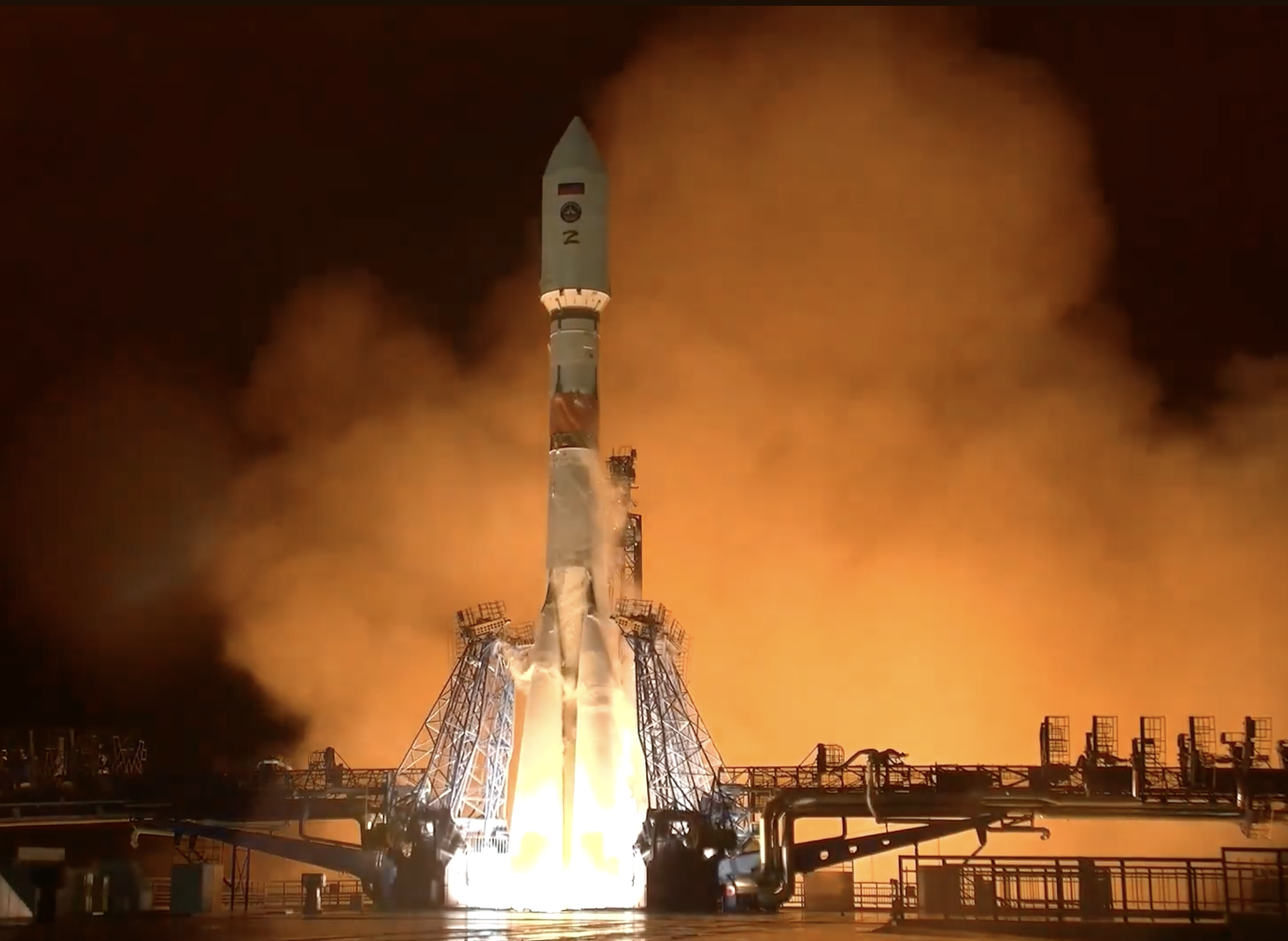
 On 18 September 2026, the Air and Space Forces conducted a successful launch of a Soyuz-2.1b rocket from the Plesetsk space launch site (Ministry of Defense video; also on YouTube). The launch took place at about 19:50 MSK (16:50 UTC). The satellite that the rocket and its Fregat boost stage delivered into orbit is believed to be a Glonass-K navigation satellite.
The satellite is likely to be designated Cosmos-2620. It received the international designation 2026-216A and was registered in the NORAD/Space-Track catalog as object 100744. At this point the Space-Track catalog lists the satellite as Object A.
The previous launch of a Glonass-K satellite took place in August 2026.
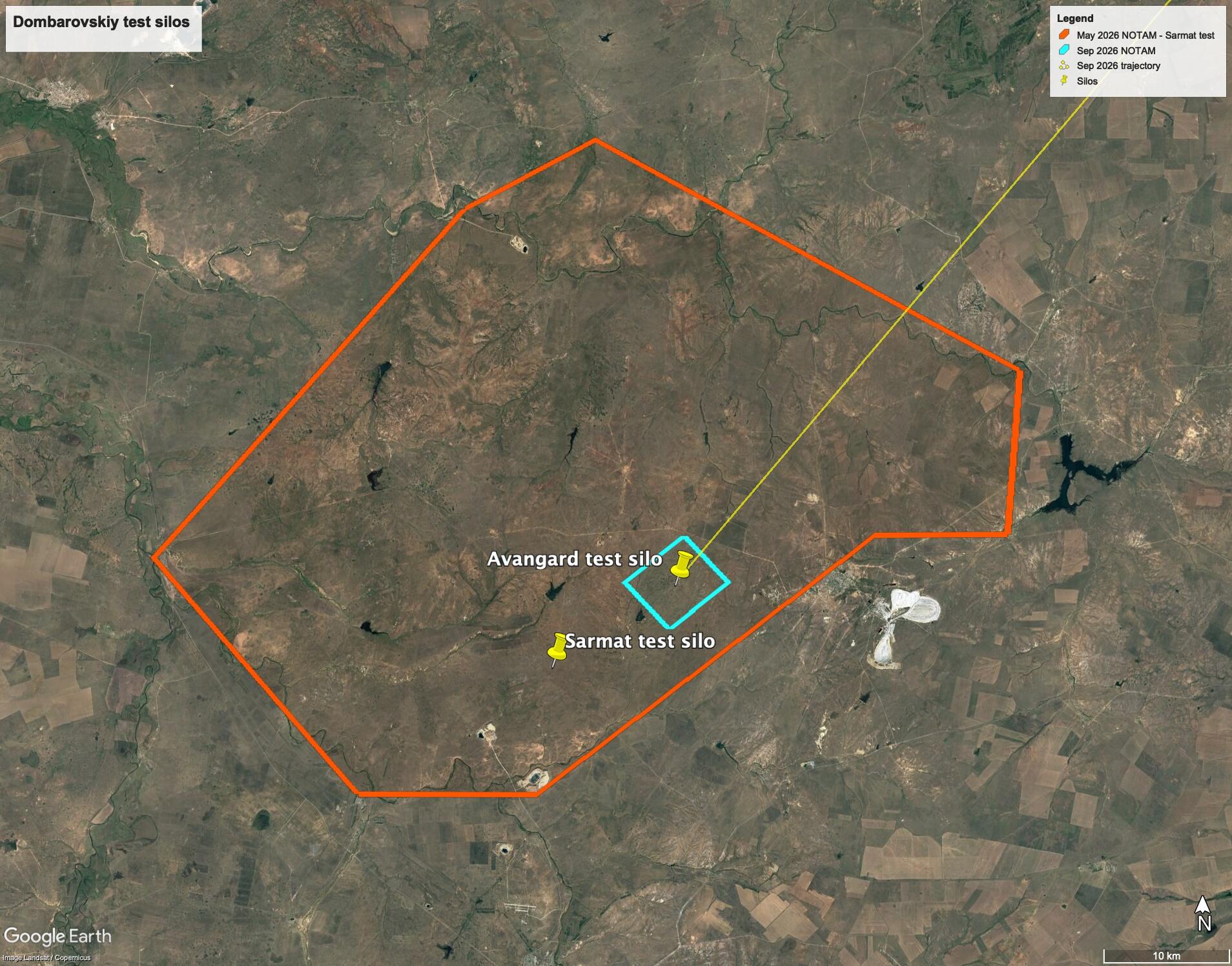 By all indications, Russia was preparing to conduct a test launch of an ICBM from Dombarovskiy/Yasnyy toward Kura during the 3-5 September 2026 window. The evidence suggests that the weapon to be tested was the Avangard hypersonic glider deployed by a UR-100NUTTH ICBM. The launch appears to have been cancelled.
There were several signs of the upcoming test. Russia released NOTAM notifications that covered the 3-5 September 2026 window. The notices were issued for Dombarovskiy, stage drop areas in the Tyumen oblast and Khanty-Mansi Autonomous Okrug (KhMAO), and the Kura test site in Kamchatka. In addition, the local press warned people in the Vikulovo, Vagaisk, and Sorokino regions of the Tyumen oblast of the upcoming test that was supposed to take place on 3 September (with 4 September as a reserve date). The areas around the Kura test site in Kamchatka also received a warning, which covered the period from 25 August to 5 September (there was a Yars launch on 28 August 2026).
The areas closed by NOTAM notifications strongly point to a launch of the Avangard system. First, the area over Dombarovskiy only covers the silo that was used to test Avangard (the most recent test took place in December 2018). The silo that was used to launch Sarmat, identified in the video of the November 2025 failed launch, is not included in the NOTAM area. For comparison, the image shows the area declared for the successful Sarmat test on 12 May 2026.
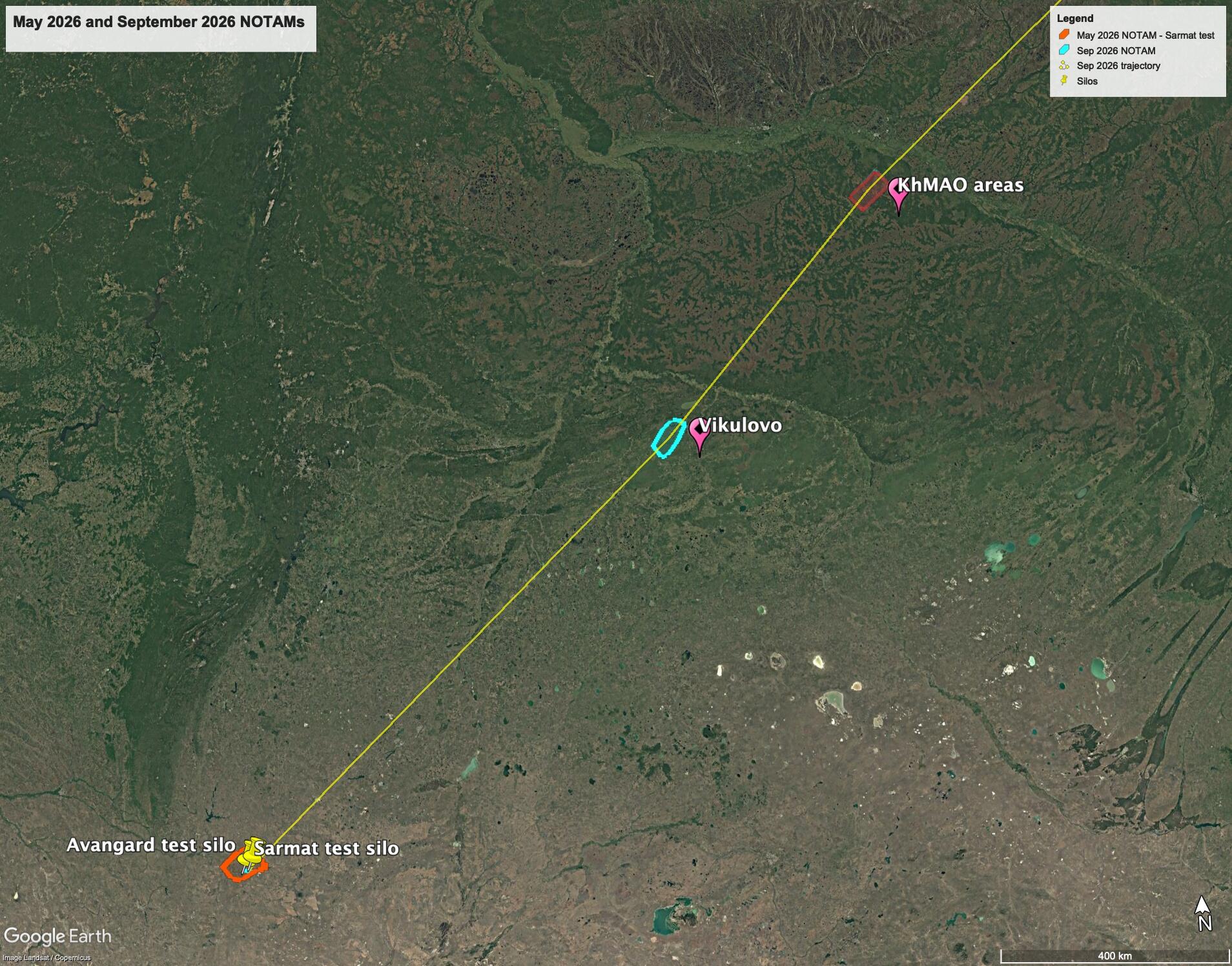 The declared stage drop areas are even more interesting. The notifications released for the May 2026 test and for the September 2026 event include the same (indeed almost identical) area in KhMAO. Apparently, that was the Sarmat first stage drop area in May 2026. But the September 2026 notification also includes the area in the Tyumen oblast, near Vikulovo, which the Sarmat notification doesn't. It appears that this is the actual first-stage drop area and the area in KhMAO plays a different role. (Theoretically, it's possible that this is where the second stage drops after releasing the glider.)
What is notable is that the area near Vikulovo appeared in many previous Avangard launches from Dombarovskiy (the tests were moved there from Baykonur in 2013). The inhabitants of the regions around Vikulovo were warned to stay away in September 2013 (vikulovo.info), February 2015, April 2016 (Krasnaya zvezda), December 2018 (vikulovo72.ru). Some of the public warnings mention that these kinds of tests have been conducted since 2004, which is when the glider made its first public appearance.
The Vikulovo area was also used as a first-stage drop area in R-36M2 tests from Baykonur, like the one in December 2009 (ura.ru). For the Dombarovskiy launches, the role of the first-stage drop area is played by the KhMAO region - both are about 1300-1400 km from the respective launch sites.
As mentioned earlier, if Vikulovo is where the Avangard booster (which is UR-100NUTTH/SS-19 missile) drops its first stage, the KhMAO area would be where the second stage lands after releasing the glider. See Figure 1 in James Acton's article on hypersonic gliders. The flight trajectory has to be adjusted to place the second stage in this specific drop area, but this may not be a factor that limits tests of the glider.
We can say with some certainty that the test did not take place as planned. A success would almost certainly be followed by a public announcement. Avangard has always been too symbolically important a weapon system for Russia to miss an opportunity to bring more attention to it.
It does not seem that the test ended in failure either. Had the launch ended in failure, one would expect NOTAMs to have been cancelled shortly after that. The notifications, however, seem to have quietly expired at the end of the 3-5 September window. It's rather circumstantial but that's all we have at the moment.
The bottom line is that Russia apparently planned to launch Avangard from Dombarovskiy to Kura, but had to scrub the test for some reason. We should expect another attempt at some point.
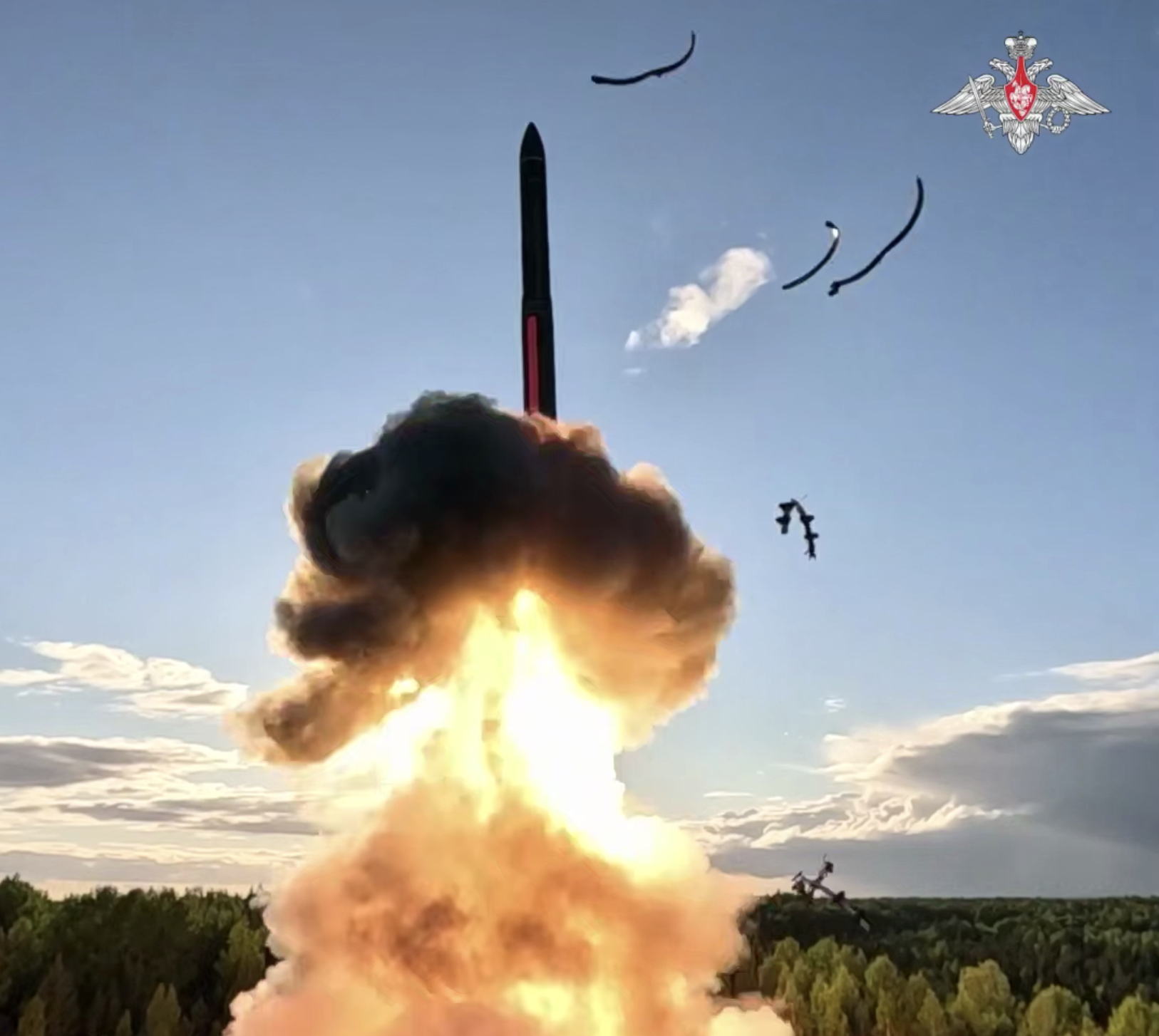 On 28 August 2026, the Russian Ministry of Defense reported conducting a successful launch of the Yars intercontinental ballistic missile from the Plesetsk test site. According to the MoD announcement, all warheads arrived at the Kura test site in Kamchatka. The video of the launch showed that the missile was launched from the Krona shelter.
The MoD also reported that "[t]he purpose of the launch was to confirm the tactical, technical, and flight characteristics of the missile system." The report also said that the missile was brought to the test site from a remote deployment base.
The previous Yars launch was conducted in May 2026, during the strategic forces exercise. At the time, the missile was also launched from the Krona shelter.
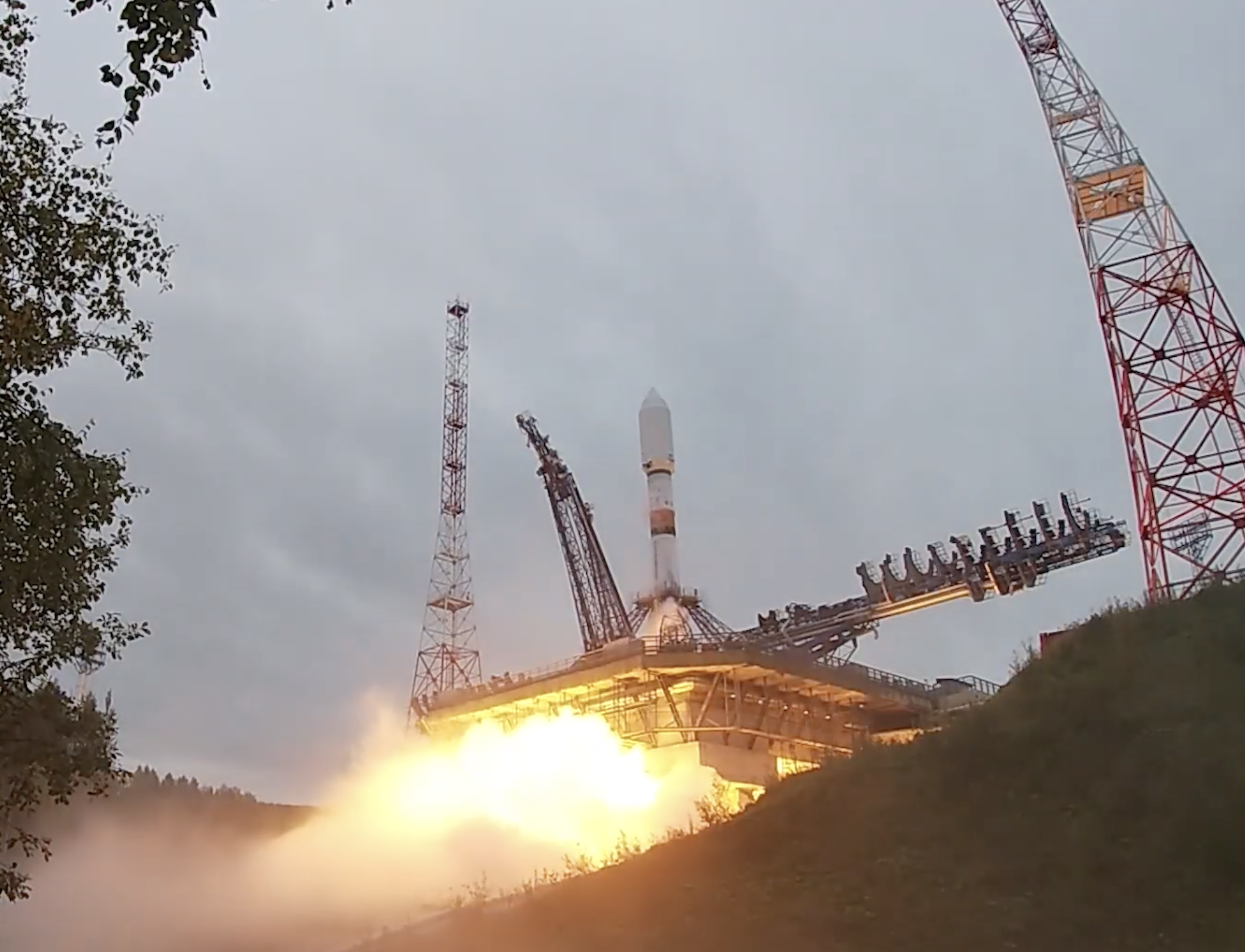 On 24 August 2026, the Air and Space Forces conducted a successful launch of a Soyuz-2.1b rocket from launch pad No. 3 of launch complex No. 43 of the Plesetsk space launch site (Ministry of Defense video; also on YouTube). The launch took place at 05:40 MSK (02:40 UTC). The satellite that the rocket and its Fregat boost stage delivered into orbit is believed to be a Glonass-K navigation satellite.
Russia stopped announcing designations of its military satellites at launch time about a year ago, but it is likely that this satellite will eventually be designated Cosmos-2619. The satellite received international designation 2026-194A and was registered in the NORAD/Space-Track catalog as object 100460. The catalog also lists the satellite as Cosmos-2619.
The previous launch of a Glonass-K satellite took place in September 2025.
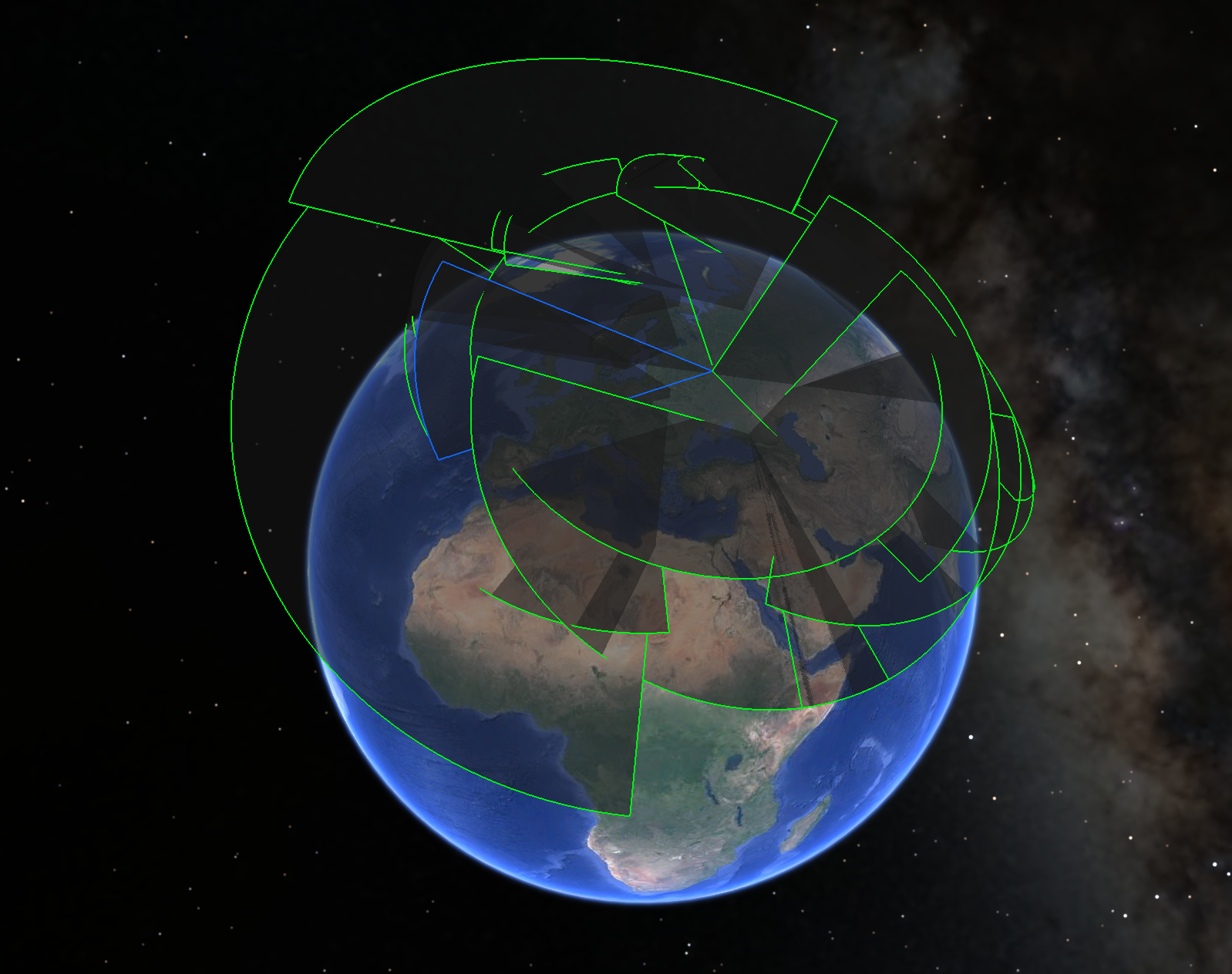 This post updates the Google Earth file with my most recent estimate of the status of Russia's early-warning and space surveillance radar network. The file can be downloaded here: RussianEarly-warningRadars2026.kmz (it's covered by this Creative Commons license). Note that the size of the radar fans does not necessarily correspond to detection ranges.
The current status of some of the radars is uncertain. One example is the Voronezh-DM1 in Olenegorsk (68.091632 34.326424). The most recent image on Google Earth is from 2021 and it shows a largely completed facility. It is also not clear if the older Dnepr at Olenegorsk is still in operation.
One recent addition to the network is a space surveillance Razvyazka radar in Chekhov, which began operations in the summer of 2023.
At least one radar site, Armavir, was attacked by Ukrainian drones on 23 May 2024. The attack appears to have damaged both Voronezh-DM radars located at the site. It is not known whether the radars have resumed operation after the strike. There were also reports about an attack on the Voronezh-M radar in Orsk on 26 May 2024. It is not clear, however, whether the radar site was damaged.
 On 19 May 2026, the Russian Ministry of Defense announced that it will hold an exercise "to prepare and use nuclear forces in the face of the threat of aggression" in the period of 19-21 May 2026. It was said to include "over 200 missile launchers, more than 140 aircraft, 73 surface ships, and 13 submarines, including 8 strategic missile submarines." The scale suggested that the non-strategic part of the exercise and Belarus' participation is accounted for as well.
The objective of the exercise may deserve a note - a more accurate translation would be "on the preparation and employment of nuclear forces under conditions of a threat of aggression." This formula has not been seen before. What is notable here is the use would not be in response to aggression, but rather "under a threat of aggression."
The timing of the exercise is also rather unusual. Normally, large exercises of strategic forces take place in the fall. One infamous exception is the exercise that was moved from the fall of 2021 to 19 February 2022, a few days before the full-scale invasion of Ukraine. It should be noted that the 2022 exercise involved non-strategic nuclear weapons, just like this one. On the other hand, there was a precedent of an exercise held in May, in 2014, so it is not entirely unprecedented.
Judging by NOTAMs, the original plan was to conduct the exercise around 9-11 May 2026. It is not clear why it was postponed.
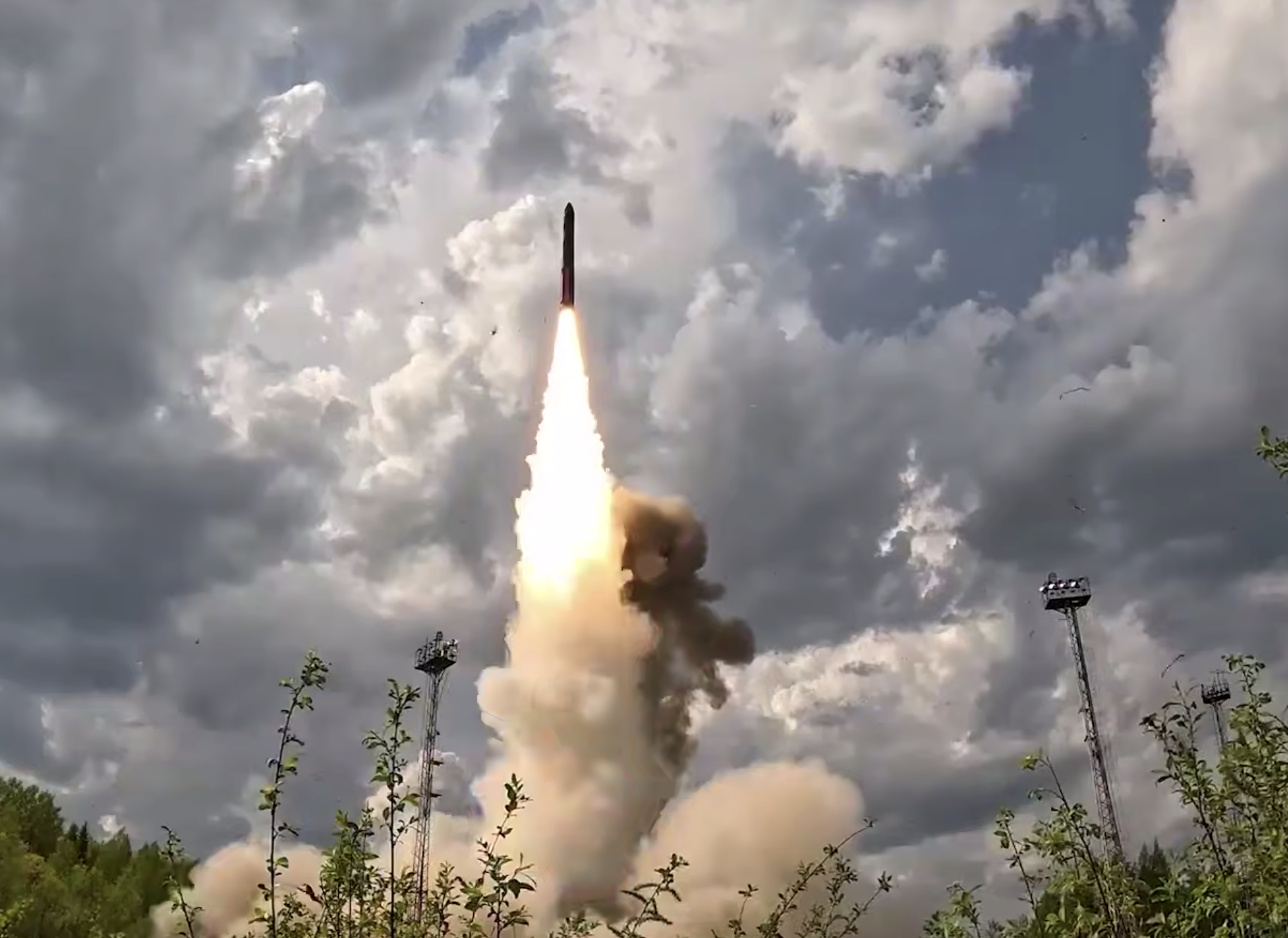
In the end, the strategic part of the exercise took place on 21 May 2026. It involved a launch of a Yars missile from a Krona shelter at the Plesetsk test site. The previous Yars launch was conducted as part of the October 2025 exercise.
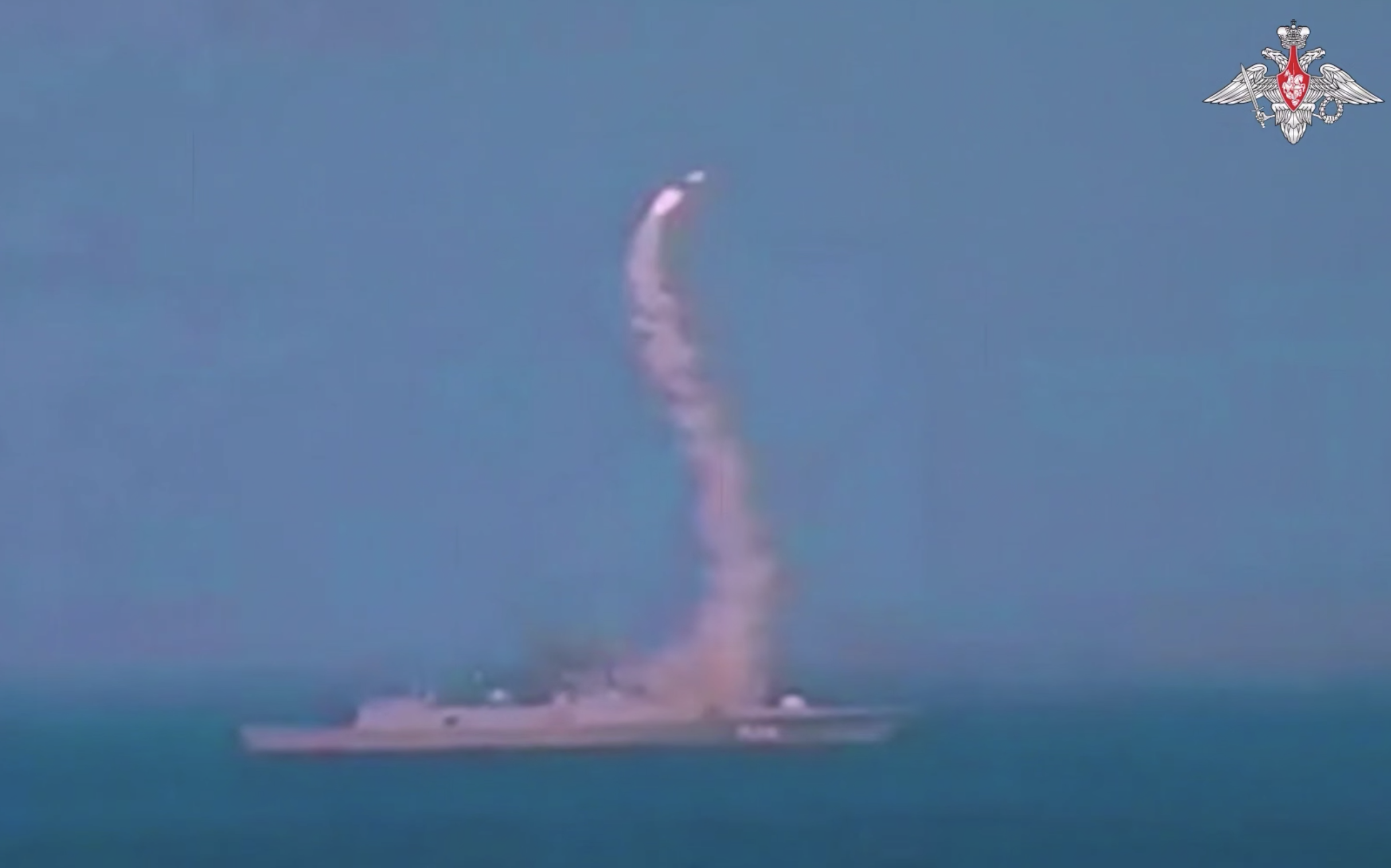 There were two launches from the Barents Sea - of a Tsirkon missile from a surface ship and of a Sineva SLBM from a Project 667BDRM/Delta IV submarine. The previous launch of Sineva took place in October 2025.
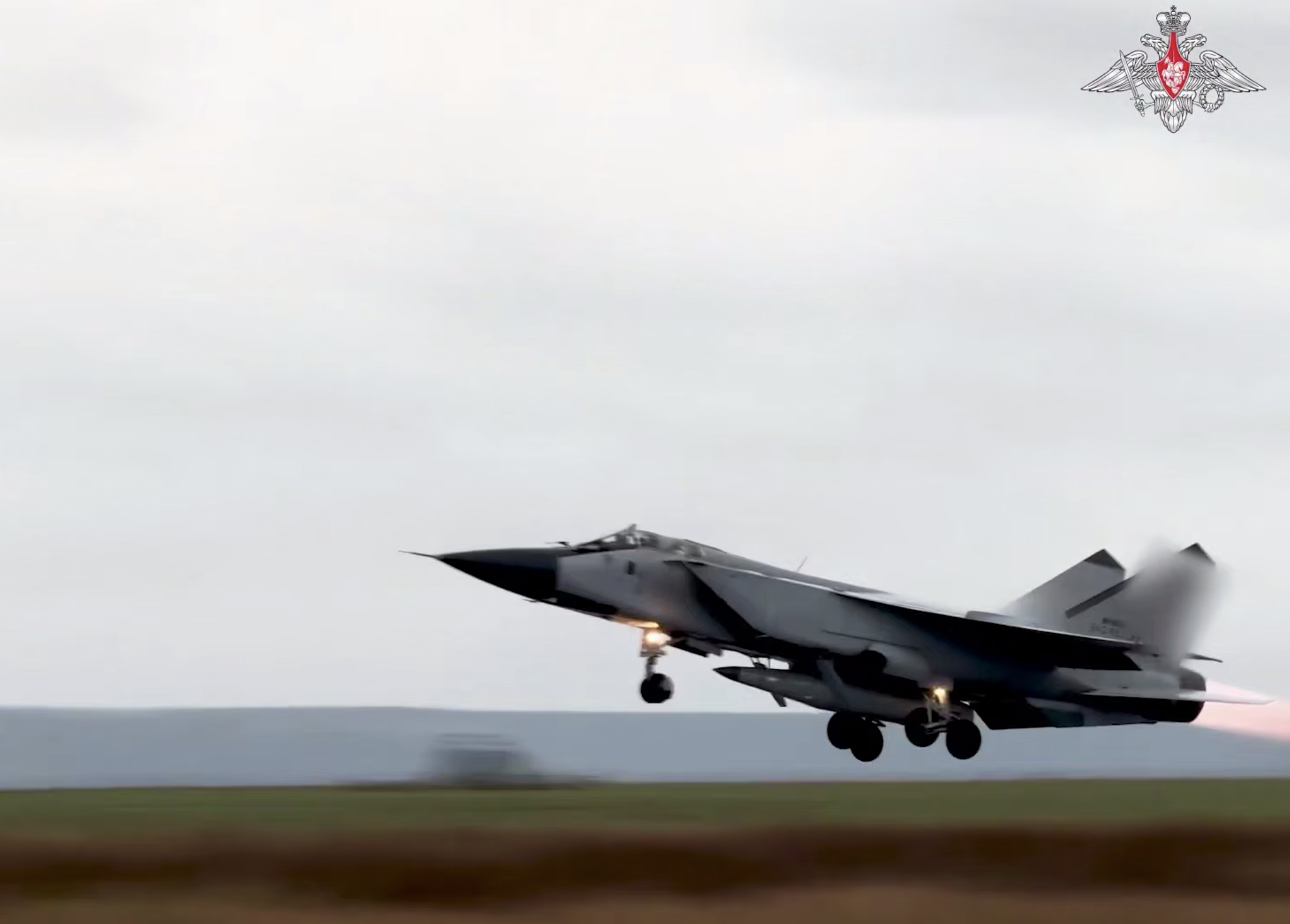 The aviation component of the exercise included Tu-95MS bombers taking off from the Ukrainka base to launch their air-launched cruise missiles and a MiG-31 aircraft taking off with a Kinzhal missile (the originally posted video showed the process of loading Kinzhal on the aircraft).
Finally, Belarusian crews conducted a launch of an Iskander ballistic missile from the Kapustin Yar test site.
It is not clear why Russia held a major strategic exercise in May and not in the fall as it normally does. The parallel with 19 February 2022 looks rather ominous, especially if you note that 2022 was also unusual in that it included launches of Tsirkon (from a submarine) and Kinzhal. Back then there was also a launch of a Kalibr cruise missile (from a submarine). Nothing similar happened this time. And it was cruise missile Iskander in 2022, not the ballistic one. But these differences are not significant. I guess we will find out soon if there is something to it.
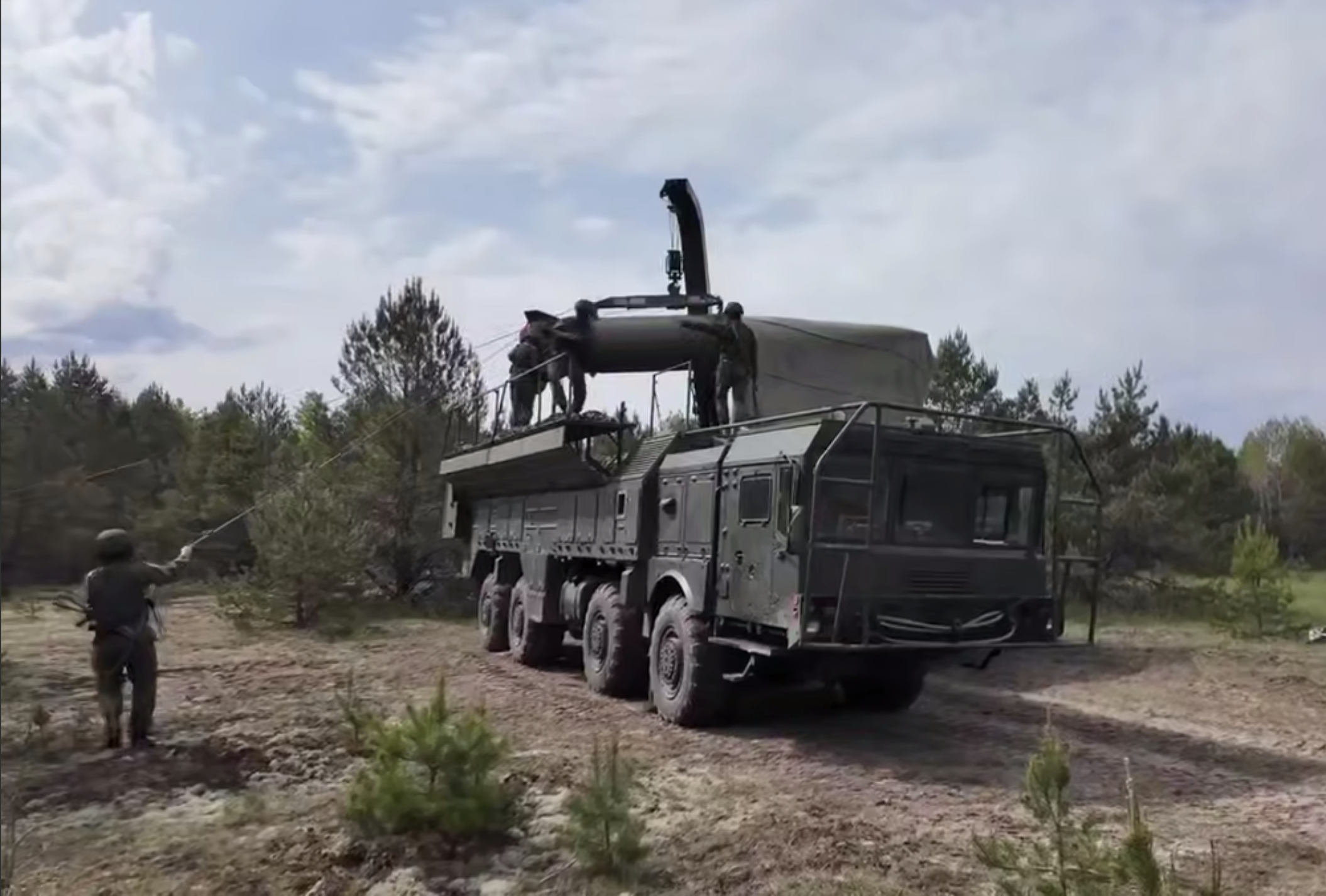 On 18 May 2026, the Belarusian Ministry of Defense announced the start of an exercise of "military units involved in the combat use of nuclear weapons and nuclear support." The objective was described as checking the readiness of the troops and "the organization of the combat employment from unplanned areas." The announcement said that the exercise will test the procedures of "delivery of nuclear weapons and their preparation for use," which will be done in coordination with the Russian military. The Russian Ministry of Defense did not say anything about its role, although the 12th Main Directorate took notice of the Belarusian exercise.
The next day, on 19 May 2026, the Russian Ministry of Defense announced that it will hold its own large-scale exercise "to prepare and use nuclear forces in the face of the threat of aggression" in the period of 19-21 May 2026. It was said to include "over 200 missile launchers, more than 140 aircraft, 73 surface ships, and 13 submarines, including 8 strategic missile submarines." Belarus' participation was mentioned as well.
The strategic part of the exercise apparently had to wait for the Russian president to return to Moscow from his visit to China. But the non-strategic element went ahead without him.
On 20 May 2026, the Russian MoD released a video (probably recorded on 19 May) of its units involved in various activities. The announcement stated that "the delivery of nuclear munitions to field storage points of missile brigades' positioning areas was ensured." The missile brigades in question apparently were those with Iskander cruise missiles, shown in the video (by the way, the containers appear to be Type 3 in Jeffrey Lewis' classification).
All this was separate from what was happening in Belarus. Russian MoD mentioned training related to "nuclear weapons deployed in Belarus," but made it reasonably clear that it is a separate activity. According to the Belarusian MoD, on 20 May 2026, the combat crews of units that operate Iskander ballistic missiles "carried out a set of measures to prepare for the receipt of special munitions and their mating with missiles." It is not entirely clear whether these measures were limited to preparations or the actual receipt and mating took place. My reading of the text is that it is the former - no Russian troops that would deliver the weapons are mentioned. The announcement also mentions aircraft, which (two Su-25) were also in the video. The aircraft were said to perform "imitation bombing with special munitions," but there was nothing to suggest that Russian 12th GUMO units were there to deliver anything.
The Russians apparently came at night. The video released by the Belarusian MoD in the morning of 21 May 2026 showed what was identified as trucks of the 12th GUMO. They appear in the second half of the video (the first half shows some Belarusian trucks that do not seem to have anything to do with anything). The video appears to show personnel opening armored back doors of the truck, probably to prepare the warhead for mating with the missile.
A few words about how the preparation for use of Iskander ballistic missiles appears to be structured. Missiles and warheads arrive at the designated meeting point (apparently the "field storage points" mentioned earlier) separately. In this case, missiles are operated by the Belarusian military, in Russia these would be Russian units. Warheads, however, are always handled by the 12th GUMO personnel. Once at the meeting point, the 12th GUMO troops mate warheads with missiles. This procedure may require a special assembly bench, but it's possible that it can be done while the missile is on the transporter vehicle.
Once the warhead is on the missile, the transporter is probably guarded by the 12th GUMO crews. When the higher command orders bringing the system to the highest degree of readiness, which may include authorization to launch the missile at a designated target, the missile and nuclear crews transfer the missile from the transporter to the launcher. As I understand it, it would be after this procedure that the 12th GUMO transfers custody of the nuclear warhead to the missile crew, Belarusian in this case. Not earlier.
The procedure of releasing weapons to aviation is probably similar, the main difference being that there is no need to transfer a weapon to a transporter vehicle. The procedure with Iskander cruise missile must be different, since the missile is stored and transported in a container and the weapon section is not easily accessible. And that difference may account for the fact that there are no cruise missiles that have nuclear warheads assigned to them in Belarus. But that is for another post.
This procedure does not require nuclear warheads to be stored near missiles. Indeed, I believe that the plan is that if time comes the warheads would be brought to Belarus from Bryansk. It is a drive that can take several hours, but it is not that unusual for the 12th GUMO. There is also an option of keeping warheads at the storage site in Asipovichi, but we have not seen a confirmation that this is what is being done.
Now, naturally, one would assume that these kinds of exercises do not involve actual nuclear weapons and everything is done with training models. But that is not what the Chief of the General Staff said on 21 May 2026 before the strategic part of the exercise (my translation):
In the first phase of the exercise, from May 19 to 20, a snap exercise of nuclear forces was conducted. Troops and forces were brought to the "Full" combat readiness, and the delivery and transfer of nuclear munitions to Russian and Belarusian units that can use nuclear weapons in combat was carried out.
This seems to suggest that the exercise went as far as to actually get to the point of mating actual warheads with missiles and loading these missiles on launchers. I hope it didn't proceed to transferring the custody of weapons to the Belarusian crews.
In any event, moving live nuclear weapons around during exercises is not a good idea. The United States, of course, did a lot of this and much worse, like having continuous bomber patrols with nuclear weapons (and a lot of accidents). Interestingly, France uses actual nuclear warheads during exercises but only within the airfield. My impression has always been that Russia is on the side of caution in these matters. Maybe not anymore. Some guardrails, however, still seem to be in place, like not flying with nuclear weapons.
To conclude, there is still a puzzle about the timing of the exercise. Why did Belarus start a day early? Note that the Chief of the General Staff said that the first part of the exercise, from 19 to 20 May, was a "snap exercise." I would say it is not entirely impossible that Belarus in a way forced Russia to add the non-strategic part to the strategic exercise it was planning for some time. I would recall that in 2024, Belarusian president in effect invited his military to the exercise that Russia announced. I am not saying this is what happened, though.
Much more important questions are, what happened to all those nuclear warheads that have been "delivered and transferred" to the units that can use them. Are they still there? They could probably stay in those "field storage points" for some time, maybe weeks. And what are those "conditions of a threat of aggression"? I guess we will know in a few days.
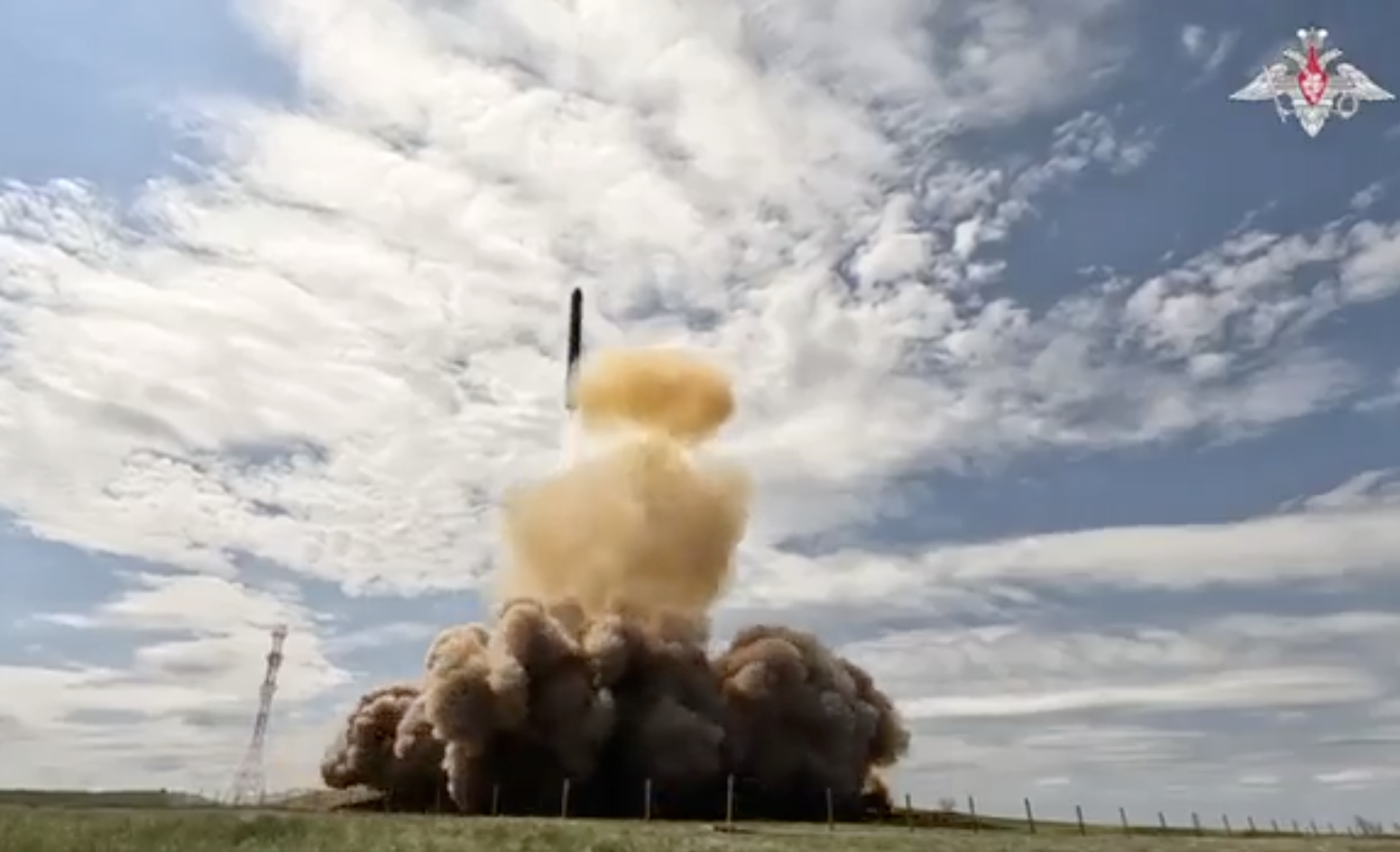 On 12 May 2026, at 11:15 MSK (08:15 UTC), the Strategic Rocket Forces conducted a successful test launch of the Sarmat ICBM (video of the launch). The missile was launched from a silo of the Dombarovskiy/Yasnyy missile division toward the Kura test site in Kamchatka.
This is the second successful test launch of the Sarmat missile. The first one took place in April 2022. The second successful test came after a series of failures. Two are known - the launch attempt in September 2024 destroyed the test silo in Plesetsk; the failed test in November 2025 was captured on video. There seems to have been a failed test in February 2023 (it was confirmed by US sources). There may have been another one, in October 2023, but it was not confirmed by a reliable source.
The program began in 2010-2011 and is seriously behind schedule (see an earlier post for the recap of the developments). The commander of the Strategic Rocket Forces reported to the president that "the first missile regiment equipped with the Sarmat system [will be] placed on combat duty in the Uzhur formation, Krasnoyarsk Territory, by the end of the year."
It is likely that the first missiles, probably two of them, will indeed be deployed with the Uzhur division by the end of 2026. It is also possible, although somewhat less likely, that the flight tests of the missile will continue.
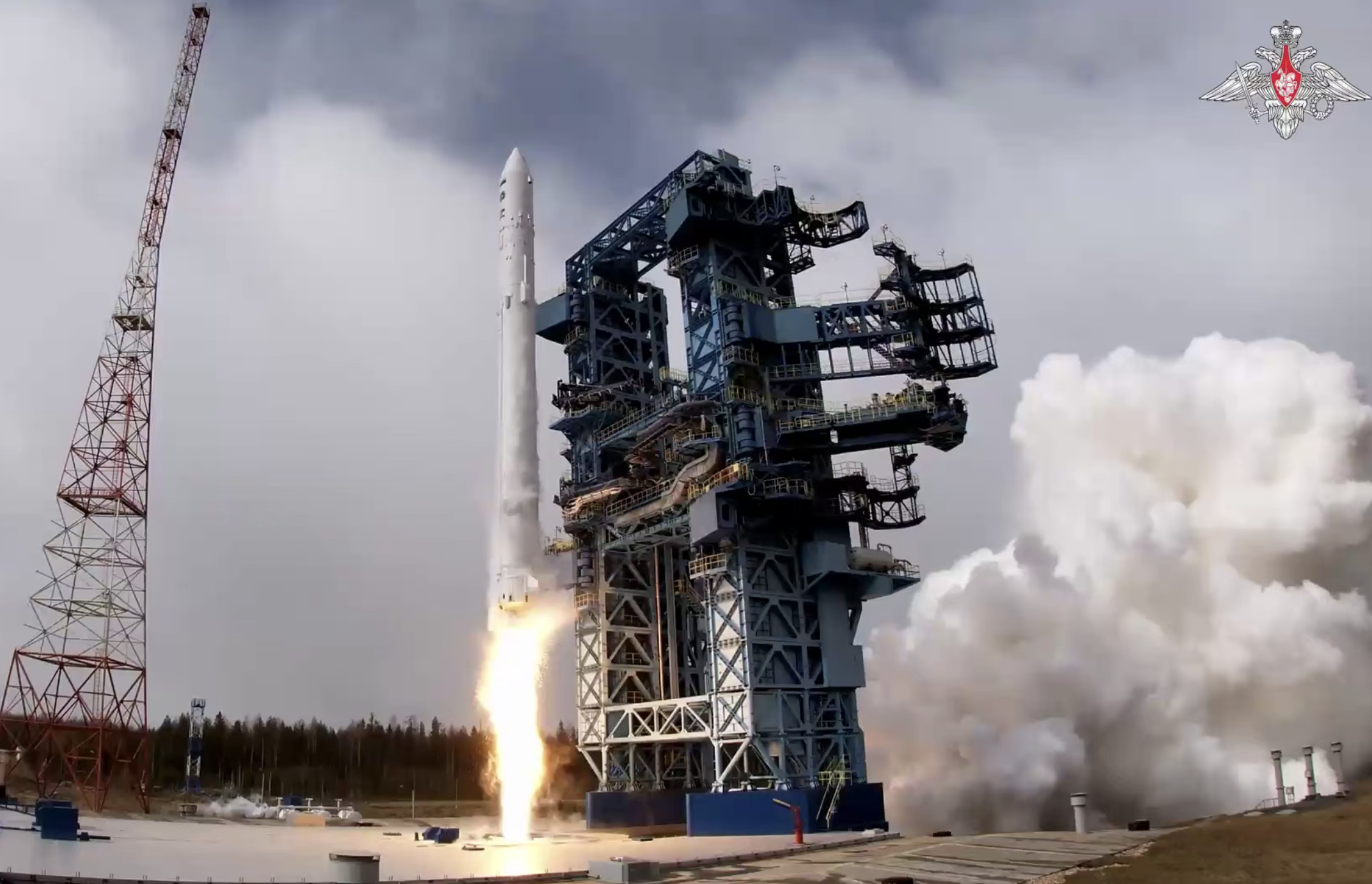 On 23 April 2026, at 11:29 MSK (08:29 UTC) crews of the Air and Space Forces conducted a successful launch of an Angara 1.2 launcher from the launch pad 1 of the launch complex 35 of the Plesetsk test site. (Video of the launch). According to the official announcement, the rocket deployed several satellites for the ministry of defense.
No Cosmos designations for the satellites have been released. They received international designation 2026-090A, 2026-090B, 2026-090C, and 2026-090D and were registered by the US Space Command as objects 68826, 68827, 68828, and 68829. The satellites are deployed on orbits nearly circular 322×338 km orbits with inclination of 96.65 degrees.
By all indications, these are satellites of the 14F178 MKA type, similar to Cosmos-2591 to Cosmos-2594 deployed in August 2025.
UPDATE 2026-05-03: US Space Command updated the catalog to add Cosmos designations for the satellites - from Cosmos-2615 to Cosmos-2618:
| NORAD ID | Name | Intl ID | Period (min) | Incl (deg) | Apogee (km) | Perigee (km) |
|---|---|---|---|---|---|---|
| 68826 | Cosmos 2615 | 2026-090A | 91.13 | 96.65 | 338 | 322 |
| 68827 | Cosmos 2616 | 2026-090B | 91.13 | 96.65 | 338 | 322 |
| 68828 | Cosmos 2617 | 2026-090C | 91.12 | 96.65 | 338 | 322 |
| 68829 | Cosmos 2618 | 2026-090D | 91.12 | 96.65 | 338 | 321 |
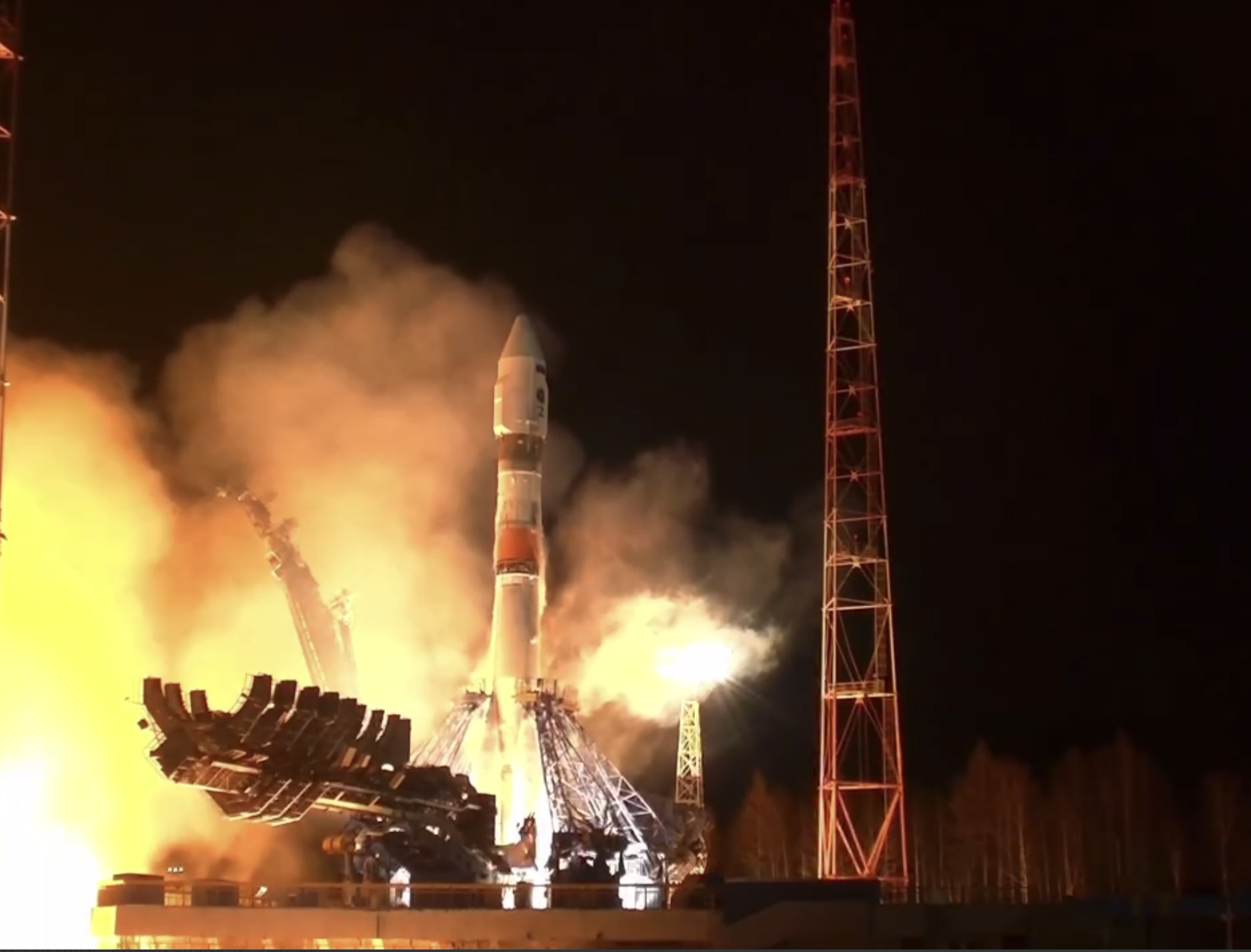 On 17 April 2026 02:17 MSK (16 April 2026, 23:17 UTC) the Air and Space Forces conducted a successful launch of a Soyuz-2.1b rocket from the launch pad No. 4 of the launch complex No. 43 of the Plesetsk space launch site. The rocket and its Volga boost stage delivered into orbit several satellites for the ministry of defense.
There has been no official announcement regarding designations of the satellites or their missions. The US Space Forces registered ten objects associated with this launch as follows (see the 2026-05-03 update below):
| 2026-083A | OBJECT A | 68753 | ||
| 2026-083B | OBJECT B | 68754 | ||
| 2026-083C | OBJECT C | 68755 | ||
| 2026-083D | OBJECT D | 68756 | ||
| 2026-083E | OBJECT E | 68757 | ||
| 2026-083F | OBJECT F | 68758 | ||
| 2026-083G | OBJECT G | 68759 | ||
| 2026-083H | OBJECT H | 68762 | ||
| 2026-083J | OBJECT J | 68763 | ||
| 2026-083K | OBJECT K | 68764 |
OBJECT C decayed shortly after launch, on 19 April 2026. OBJECT E appears to be decaying and is likely to reenter relatively soon. OBJECT D may be the Volga upper stage. It performed an orbit-lowering maneuver on 18 April 2026, probably designed to accelerate the decay.
The active satellites are deployed in two groups: OBJECT A and OBJECT B are placed in the plane with inclination of 98.25 degrees. The satellites are deployed on near-circular orbits with altitude of about 495-550 km.
The other five satellites, from OBJECT F to OBJECT K, are deployed in near-circular orbits with the inclination of 96.95 degrees and altitude of about 547 km.
While the mission of neither group of satellites is known, one possibility, suggested by Anatoly Zak, is that these are radar-imaging satellites developed by NPO Mashinostroyeniya.
This launch continued the practice of not disclosing satellite Cosmos numbers or even the number of deployed satellites. In some cases, designations are released by the US Space Forces, as was the case with Cosmos-2600, launched in February 2026. But the eight satellites launched in the same mission are still listed as OBJECT B to OBJECT J.
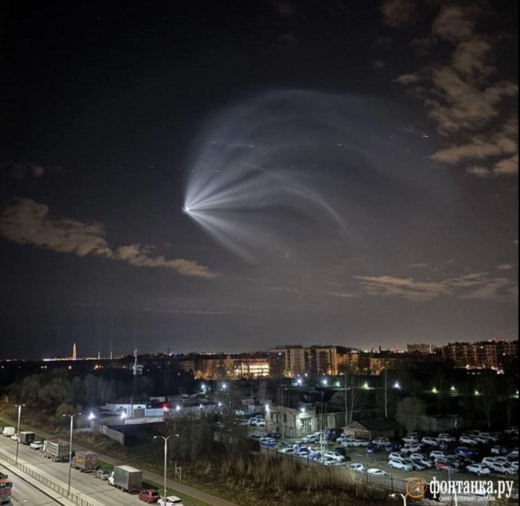
P.S. The launch was observed in several cities in the North, for example, in St. Petersburg. The image below is from a Fontanka.ru story.
UPDATE 2026-05-03: US Space Command updated designations of the registered objects as follows:
| 2026-083A | SL-4 R/B ROCKET BODY | 68753 | ||
| 2026-083B | COSMOS 2609 PAYLOAD | 68754 | ||
| 2026-083C | SL-4 DEB DEBRIS | 68755 | ||
| 2026-083D | VOLGA R/B ROCKET BODY | 68756 | ||
| 2026-083E | SL-4 DEB DEBRIS | 68757 | ||
| 2026-083F | COSMOS 2610 PAYLOAD | 68758 | ||
| 2026-083G | COSMOS 2611 PAYLOAD | 68759 | ||
| 2026-083H | COSMOS 2612 PAYLOAD | 68762 | ||
| 2026-083J | COSMOS 2613 PAYLOAD | 68763 | ||
| 2026-083K | COSMOS 2614 PAYLOAD | 68764 |
Only six objects are identified as payloads. Their Cosmos designations are probably preliminary. Russia has not yet officially released satellite names.
The book